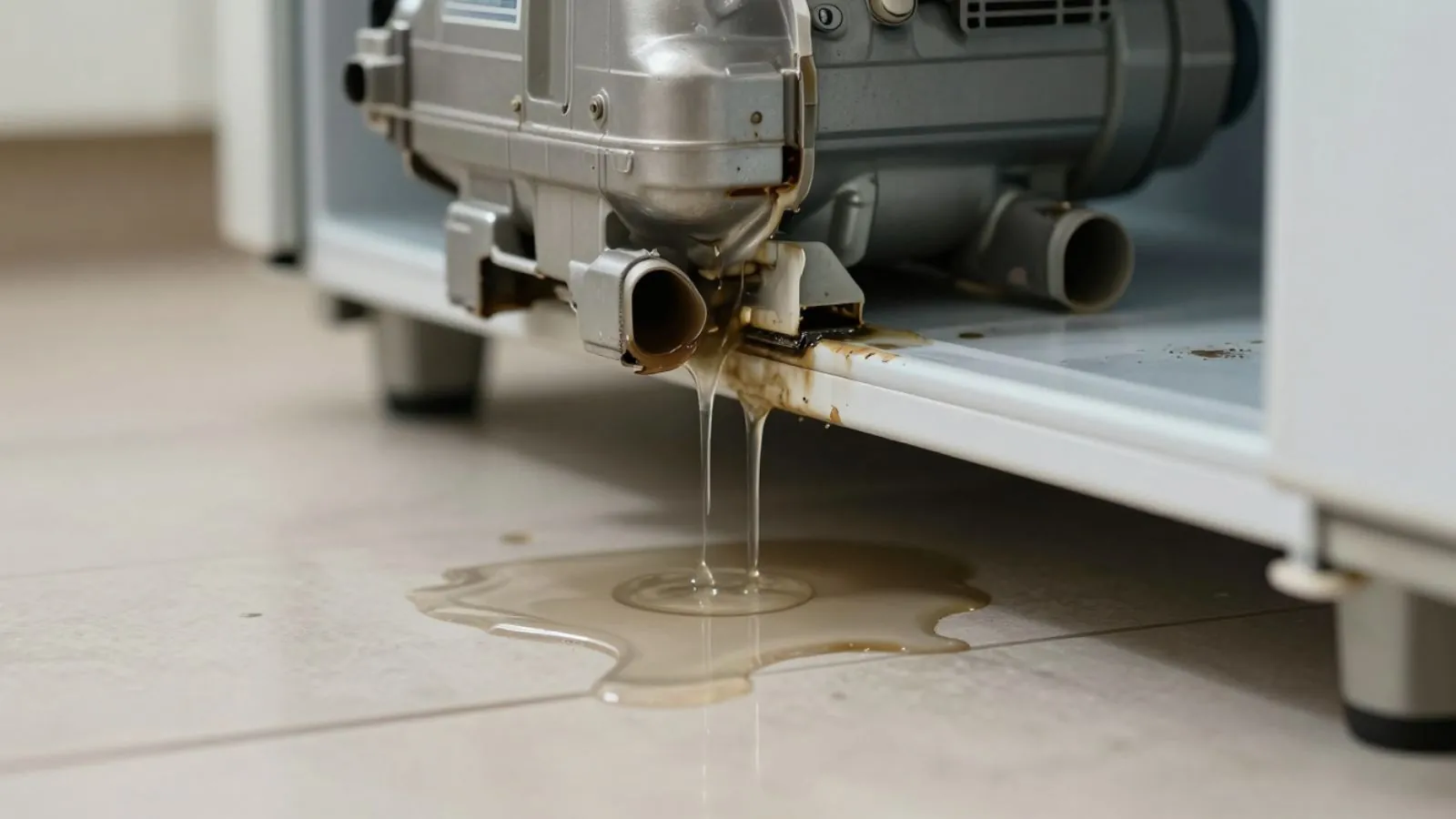
Appliance leak water damage comes from the supply hose, drain line or internal parts of a washing machine, dishwasher, refrigerator ice maker or similar unit. These failures are common because rubber hoses age, fittings loosen and drain lines clog.
If water is coming from an appliance, close its shutoff valve, unplug the unit if the cord is dry and reachable, and call the 24/7 line. A hose that fails under pressure puts water on the floor in minutes.
Appliance leaking: first steps
Most appliance leaks can be slowed before the crew arrives.
- Close the shutoff valve on the supply hose behind or beside the unit.
- Unplug the appliance only if the plug and floor are dry. If water is near the outlet, leave it and call the utility.
- Pull the appliance out only if you can do so without standing in water.
- Photograph the hose, the shutoff and the wet area, then call the dispatch line.
Washing machines, dishwashers and refrigerators
A washing machine hose that bursts releases supply pressure into the laundry room, and the water can run into a basement or the room below. A dishwasher leak is often a slow drip from the door seal or the supply connection that soaks the cabinet base and the subfloor beneath it. A refrigerator ice maker line is a slow leak that hides behind the unit and under the floor.
Each of these has a different drying problem. Laundry rooms often have vinyl over plywood, where water gets between layers. Kitchens have cabinet bases and toe kicks that trap water. We use moisture meters to find those hidden wet areas before closing anything back up, and we refer you to kitchen water damage restoration for cabinets and the sink area.
What cleanup includes
- Extraction of surface water around and under the appliance.
- Moisture checks of the subfloor, cabinet bases, wall bottoms and, if present, the ceiling below.
- Removal of materials that cannot be dried, such as swollen toe kicks or soaked underlayment.
- Drying with air movers and dehumidifiers until readings return to normal.
Prevention that is cheap and boring
Braided steel hoses tend to outlast rubber hoses, and a hose that is old, bulging or cracked is a warning. Leaving a washing machine running while no one is home is a common start to a flood, which is one reason plumbers suggest closing the shutoff when you leave for several days. These are household habits, not plumbing work.
Which appliance, which damage
| Appliance | Common failure | Where the water hides |
|---|---|---|
| Washing machine | Supply hose or drain hose | Subfloor and the room below |
| Dishwasher | Door seal, supply connection or drain | Cabinet base and under the flooring |
| Refrigerator | Ice maker supply line | Behind the unit and under the kitchen floor |
| Other units | Condensate or supply connections | Walls, floors and ceilings below |
Where appliance water ends up
A leak from a dishwasher, refrigerator line or washing machine rarely stays where it starts. It spreads across the floor, runs under cabinets and wicks into the bottom of the wall. Once it reaches the subfloor, structural drying is what removes it.
If the floor is carpet, carpet water damage restoration explains what can be saved. If water got behind the wall, wall and drywall water damage repair describes how the cut is decided.
Standards that guide the work
Professional drying for a leak from a washer, dishwasher or refrigerator line is usually planned around ANSI/IICRC S500, the industry standard for water damage restoration. It sorts water into categories by contamination and describes how to dry structure and contents. A clean supply line leak is treated differently from a drain backup, so the source matters.
What to do first
- Stay out of any room where water is touching outlets, cords or appliances, and shut off power to that area at the breaker only if the panel is dry and you can reach it without standing in water.
- If it is safe, stop the source by closing the nearest shutoff valve or the main valve.
- Keep children and pets away from standing water, since it may carry contamination.
- Take photos before moving anything, then call for help.
What affects the cost of appliance leak cleanup
A short hose failure and a months-long drip are very different jobs.
- Duration
- Water that ran for minutes is a simple floor job, and water that ran for weeks reaches the subfloor.
- Floor system
- Vinyl over plywood, tile over concrete and hardwood each have different drying needs.
- Cabinetry
- Cabinet bases and toe kicks are often removed or dried in place.
- Rooms below
- A leak above a finished ceiling adds ceiling and wall drying.
- Drying days
- Equipment time follows moisture readings.
Costs are explained before work starts, and the written scope is the document to compare against your policy. Want your real number? Call (833) 521-1033 and describe what you see.
Frequently asked questions
Do you handle appliance leak emergencies at night or on weekends in Bethlehem?
Yes. The dispatch line is answered 24/7. A washing machine hose that fails at night is a typical call.
Do you repair or replace appliances?
No. We handle the water damage. An appliance technician repairs or replaces the unit.
Will my homeowners insurance cover an appliance leak?
Sudden leaks from a hose or an appliance are often covered, while slow leaks are often not. Ask your insurer.
How can I tell if a leak has been slow and hidden?
Look for a musty smell, a floor that has softened, a baseboard that has swelled and a stain on the ceiling below. A moisture reading confirms it.
Should I stop using the appliance?
Yes, until the cause is fixed and the area has been checked. Using it again can restart the leak.