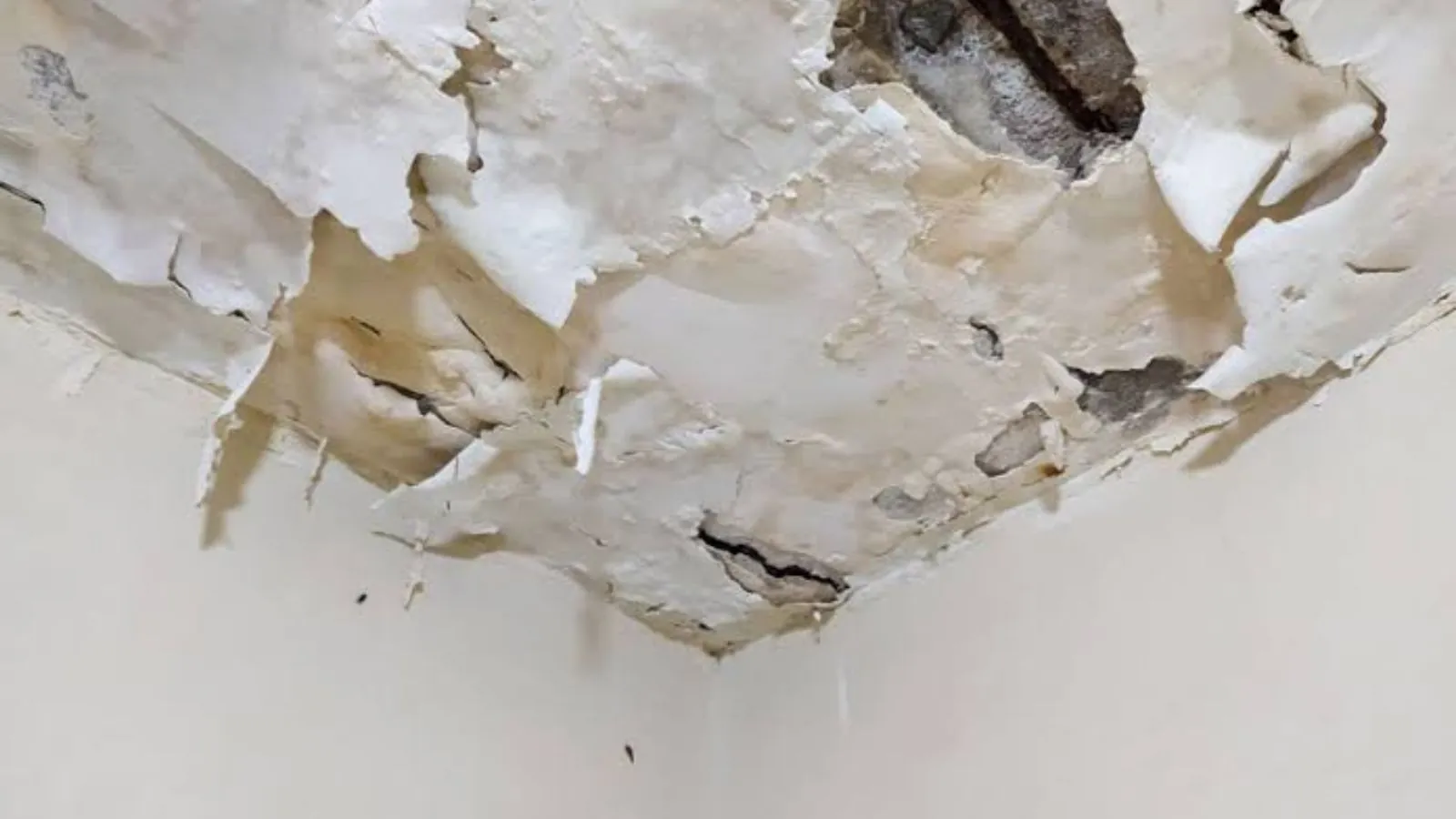
Wall and drywall water damage repair covers the walls, baseboards and wall cavities affected by a leak or flood. Drywall is gypsum between paper, and it softens when wet, while the insulation and framing behind it hold water long after the surface looks fine.
If a wall is damp or stained, call for moisture mapping. The dispatch line is open 24/7 if water is still running.
Wet wall: what to check first
A wall that looks dry can still be wet inside.
- Shut off the water source and remove baseboards only if told to.
- Note bubbling paint, soft spots, discoloration or a musty smell.
- Photograph the wall and the baseboard, with a ruler or coin for scale.
- Call us for moisture mapping, and avoid painting over damp drywall.
How drywall responds to water
Drywall can wick water several inches up from a wet floor. Paint bubbles, baseboards swell and paper tape lifts. Inside the wall, insulation soaks and can hold water against the framing for weeks. Water from above, such as a leak through a ceiling, runs down inside the cavity.
Some drywall can be dried if it was wet briefly with clean water. If it softens, crumbles or was soaked in contaminated water, it is cut out. The cut is usually made above the wet line, and the open cavity is dried before closing.
Baseboards, insulation and framing
Baseboards are often removed to let moisture escape. Fiberglass insulation in a wet cavity is usually removed because it dries slowly and loses its function. Wood studs dry well, and a meter confirms when they are at a normal reading. Where a wall adjoins a wet floor, hardwood floor water damage repair or carpet water damage restoration may be part of the same plan.
The repair process
- Moisture mapping of the wall, ceiling and floor edges.
- Cutting out drywall that cannot be dried and removing wet insulation.
- Drying the cavity with air movers and dehumidifiers.
- A written scope for replacement drywall, finishing and paint.
Wall damage by cause
| Cause | Where it shows | Related page |
|---|---|---|
| Plumbing leak in the wall | Stain or bubble at a pipe run | Burst pipe water damage |
| Roof or window leak | Stain at the ceiling line or window | Storm water damage cleanup |
| Floor water wicking up | Wet at the wall base | Water extraction |
| Ceiling leak running down the wall | Stain below the ceiling edge | Ceiling water damage repair |
When to call for a wall
Call if a wall feels cool or damp, if paint is bubbling or if a stain grows after you stop the source. Those signs mean the cavity may still hold water. A moisture reading shows where it is, and it keeps you from closing up a wet wall.
Standards that guide the work
Decisions about wet walls typically follow ANSI/IICRC S500, the industry standard for water damage restoration, along with the drywall manufacturer's guidance. Moisture readings in the wall cavity matter more than how the surface looks.
What affects the cost of wall and drywall water damage repair
The size of the cut and the drying time shape the scope.
- Height of the wet line
- The cut extends above the wet edge.
- Insulation
- Wet insulation is removed and counted.
- Wall length
- More wall means more labor and equipment.
- Finish
- Texture, paint and trim are rebuild steps.
- Drying days
- Framing dries over days, not hours.
Costs are explained before work starts, and the written scope is the document to compare against your policy. Want your real number? Call (833) 521-1033 and describe what you see.
Frequently asked questions
Can I paint over a water stain?
Painting over a stain seals moisture in. Dry the wall first and confirm with a meter.
Do you handle wall water emergencies at night or on weekends in Bethlehem?
Yes, the dispatch line is answered 24/7 if water is still running.
Do you replace and finish drywall?
We dry and document. Drywall replacement and finishing are rebuild steps, and we write the scope.
How do I know if wall insulation is wet?
A moisture meter or thermal camera shows it. A musty smell or cool, damp wall is a clue.
Will insurance cover drywall?
Sudden water is often covered, and flood is usually excluded. Ask your insurer.