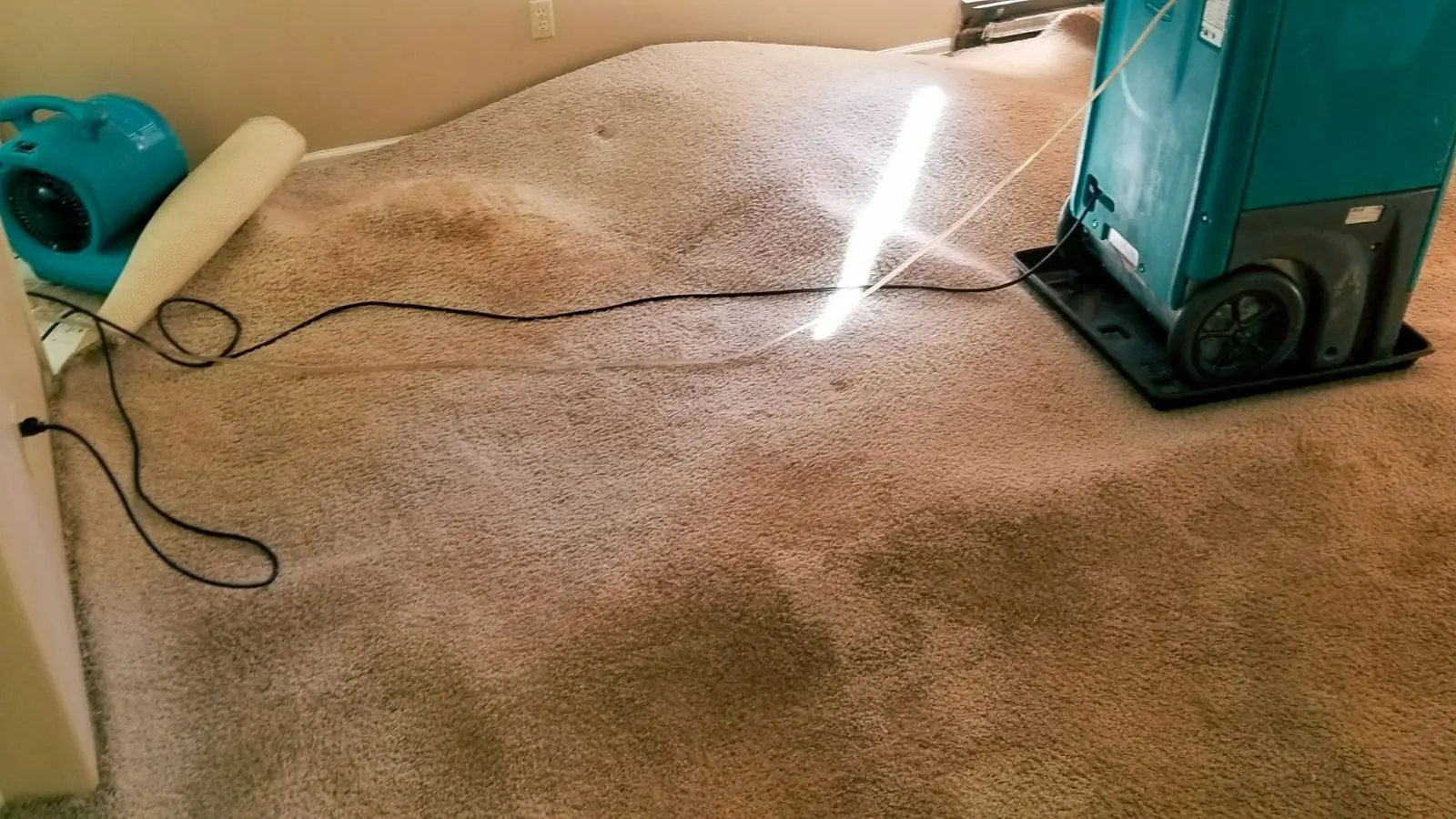
Basement water damage cleanup is the removal of water from a below-grade room and the drying of its walls, floors and contents. Basements fill from groundwater, a sump pump that fails, window wells, a plumbing leak or a sewer backup, and each source changes the safety steps.
If water is in your basement, treat it as an emergency, and call the 24/7 line. Do not go down if water reaches outlets, appliances or a panel.
Water in the basement: first steps
A flooded basement can hide electrical hazards.
- Do not enter if water covers outlets, appliances or the panel. Call the utility or 911 if you suspect electrical danger.
- Do not use household vacuums on water.
- Move items from stairs and upper floors out of the way, and keep children and pets out.
- Photograph the water line and the contents from the stairs, then call the dispatch line.
Where basement water comes from
The source decides the category. Clean water from a supply line or an overflowing sump is Category 1 or 2. Water that came with a sewer backup or creek overflow is Category 3. A seep through the floor after heavy rain is often treated as Category 2. The crew will identify the likely source and plan accordingly.
Bethlehem sits where Saucon Creek and Monocacy Creek meet the Lehigh River, and neighborhoods near those creeks have seen basement flooding in major rain events. News reports of the remnants of Ida in 2021 described Saucon Creek flooding basements near Saucon Park and a sump pump that stopped in one home. A working sump pump with a battery backup is a homeowner decision, and we handle the damage when it fails.
Finished basements and contents
A finished basement has carpet, drywall, insulation, trim and furniture that all soak differently. Drywall absorbs water from the bottom up. Insulation holds it. Carpet and pad are extracted and either dried or removed. Boxes, books and electronics need quick sorting. We list what was removed and what was dried so you have a record for your insurer.
Restoration is not waterproofing. If you want to stop water from coming back, a waterproofing contractor addresses the foundation and drainage. We dry and restore the space after it has been wet.
Basement cleanup steps
- Extraction of water with pumps and wands.
- Removal of wet carpet, pad, insulation and drywall that cannot be dried.
- Drying of the slab, walls and framing with air movers and dehumidifiers.
- A moisture check and written scope for the rebuild.
Basement flooding by source
| Source | Water category | Related page |
|---|---|---|
| Supply line or water heater | Category 1 at first | Water heater leak cleanup |
| Sump pump failure or groundwater | Category 2 often | This page and water extraction |
| Sewer backup | Category 3 | Sewage backup cleanup |
| Creek or river overflow | Category 3 often | Flood damage cleanup |
Standards that guide the work
ANSI/IICRC S500 is the industry standard that guides professional water damage work, including how water is categorized by contamination and when porous materials should be removed instead of dried. For flooded basements, the CDC also publishes cleanup guidance for homeowners, including advice on protective gear and on discarding items that cannot be cleaned.
What affects the cost of basement water damage cleanup
Finished and unfinished basements are very different jobs.
- Water category
- Clean water is simpler than Category 2 or 3 water.
- Finish level
- Carpet, drywall and trim add scope.
- Depth and duration
- Deeper and longer water reaches more materials.
- Contents
- Stored items may be sorted, moved or discarded.
- Drying days
- Concrete dries slowly, and the meter decides.
Costs are explained before work starts, and the written scope is the document to compare against your policy. Want your real number? Call (833) 521-1033 and describe what you see.
Frequently asked questions
Do you handle basement flooding emergencies at night or on weekends in Bethlehem?
Yes. The dispatch line is answered 24/7, and storms often cause nighttime basement calls.
Do you waterproof basements?
No. We dry and restore after water damage. A waterproofing contractor addresses the foundation.
Will insurance cover basement flooding?
Groundwater and flood are often excluded, and a burst supply line may be covered. Ask your insurer.
Can I save my belongings?
Many hard items can be cleaned. Porous items such as cardboard and upholstery often cannot.
How do I check my flood risk?
Look up your address on the FEMA Flood Map Service Center, and ask the city building department about local conditions.