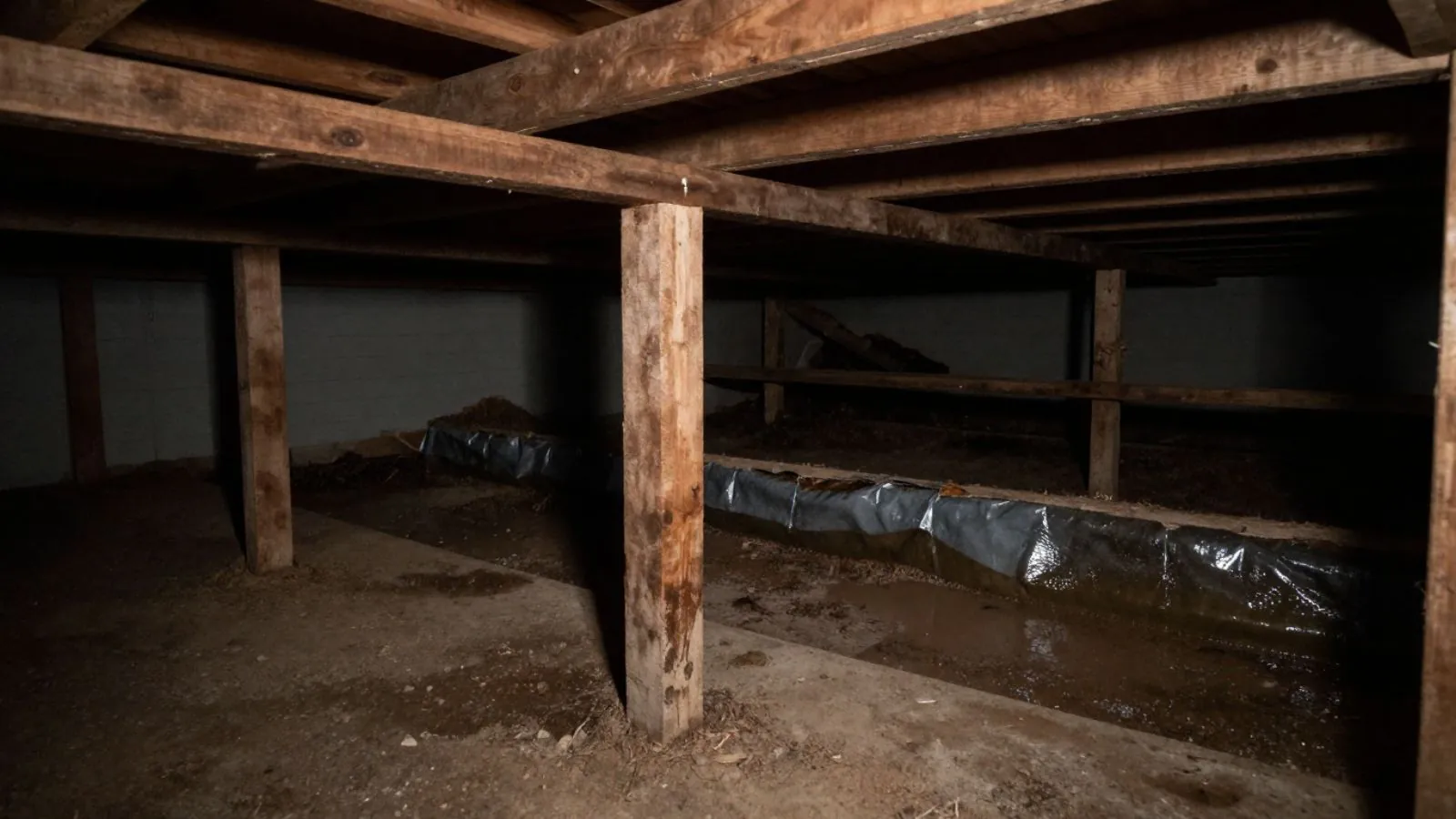
Crawl space water damage is water in the low void under a floor, from groundwater, a plumbing leak or a foundation seep. The space is dark and closed, so water sits, insulation soaks, and humidity rises into the floor above.
If you can see standing water, call the dispatch line. A crawl space is a confined space, and no one should enter one with water near wiring.
Water in the crawl space: before you go in
Crawl spaces are tight, and wiring and ducts often run low.
- Do not enter if water is near wiring, a panel or a furnace.
- Shut off the main water valve if a pipe is the source.
- Look through the access for standing water, wet insulation and a torn vapor barrier, and photograph from the opening.
- Call us for extraction and drying.
What is different about a crawl space
A crawl space has dirt or concrete floors, joists above, insulation between them and often a plastic vapor barrier. Water from a plumbing leak runs onto the barrier and pools in low spots. Groundwater after heavy rain pushes in through the foundation and soaks the dirt. The joists and subfloor above stay damp and can transfer moisture to the floor above.
Wet insulation falls and stops working, and it holds water against the wood. Drying a crawl space means removing the wet insulation, pumping water, running air movers and dehumidifiers, and checking the wood with a meter.
Water coming from outside
After the remnants of Ida in 2021, local news reports described Saucon Creek flooding basements and ground floors in Bethlehem. In heavy rain events, crawl spaces in low spots can take water too. The mapped flood hazard for your address is on the FEMA Flood Map Service Center, and whether your house has a crawl space, a basement or a slab is something you can confirm from the assessor record or a look under the house.
If water entered from the outside, it may be Category 2 or 3. Flood damage cleanup describes how that is handled. If a plumbing leak is the source, burst pipe water damage explains the pipe side.
What a crawl space job covers
- Extraction of water from the barrier and the dirt floor.
- Removal of insulation and debris that cannot be dried.
- Drying of joists, the subfloor and the floor above.
- A moisture reading of the framing before anything is closed.
Crawl space symptoms
| Symptom | Likely cause | Next step |
|---|---|---|
| Musty smell in the house | Damp crawl space | Moisture reading |
| Sagging insulation | Wet insulation | Extraction and removal |
| Cupped hardwood above | Moisture from below | See hardwood floor water damage repair |
| Standing water | Groundwater or a leak | Extraction and source check |
Standards that guide the work
ANSI/IICRC S500 is the industry standard behind professional water damage restoration. For crawl spaces, the EPA also publishes general guidance on moisture control and on keeping humidity in check, which is a useful reference for the drying and prevention steps described here.
What affects the cost of crawl space water damage cleanup
Access and the amount of insulation are often the biggest swing factors.
- Access
- A tight crawl space slows every step.
- Insulation and barrier
- Wet insulation and torn barriers are removed and counted.
- Water source
- Groundwater and plumbing leaks need different handling.
- Wood moisture
- Joists and subfloor dry over days, not hours.
- Drying equipment
- Dehumidifiers run until readings are normal.
Costs are explained before work starts, and the written scope is the document to compare against your policy. Want your real number? Call (833) 521-1033 and describe what you see.
Frequently asked questions
Is water in a crawl space an emergency?
Active water is an emergency, and the dispatch line is open 24/7. A slow damp is still worth a prompt call.
Do you waterproof crawl spaces?
No. We dry and restore after water damage. Waterproofing and encapsulation are separate work.
Will insurance cover crawl space water?
Groundwater and flood are often excluded, while a sudden plumbing leak may be covered. Ask your insurer.
Do I need to enter the crawl space?
No. Call us, and the crew enters with equipment and protection.
How do I know if my house has a crawl space?
Look for an access hatch in the foundation or a floor with a low void beneath. Many houses here have basements instead.