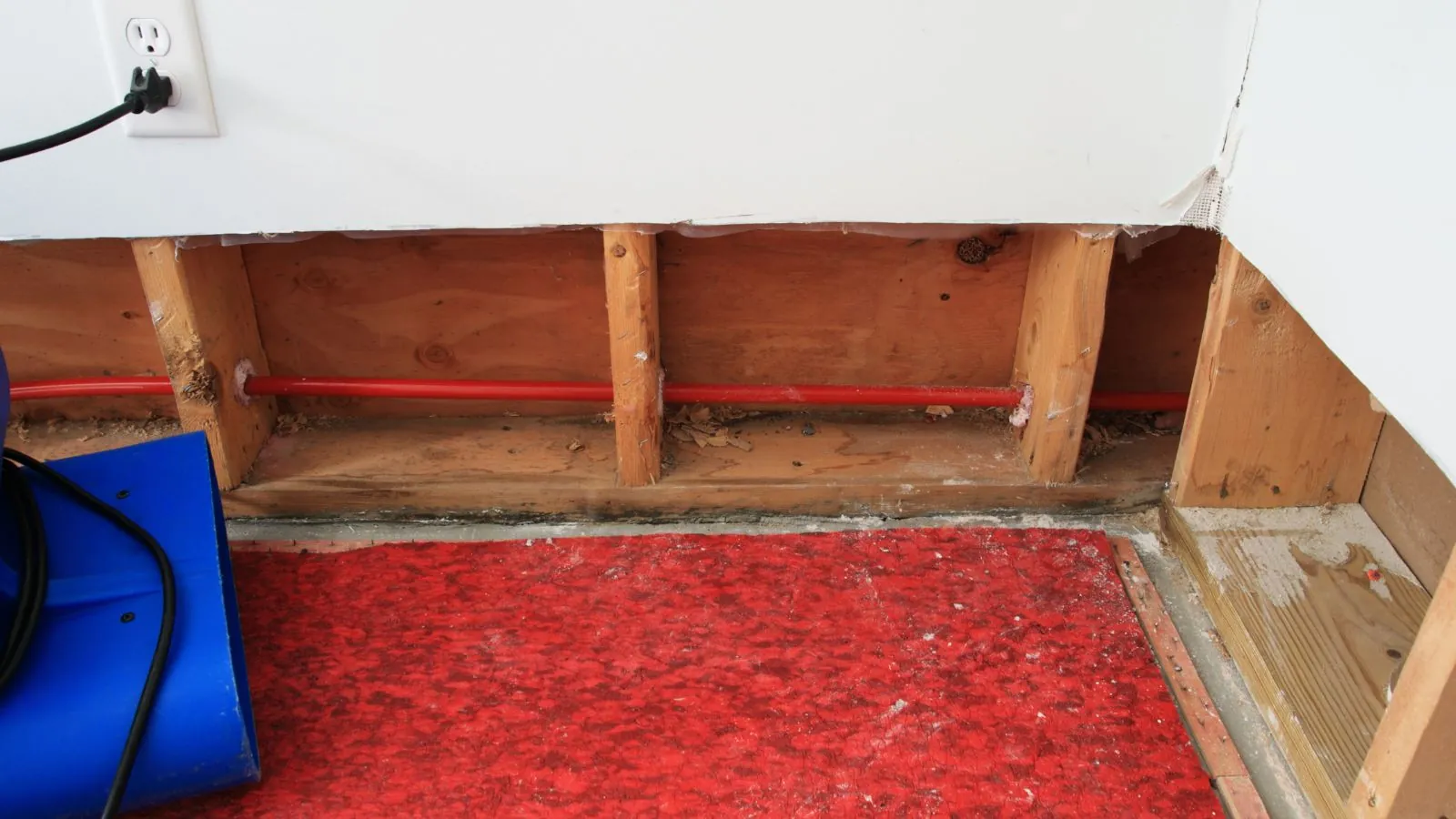
Carpet water damage restoration is the extraction and drying of carpet and its pad after a leak or flood. Carpet is a surface layer, and the pad beneath it holds most of the water, so the first question is whether the pad can be dried or must be discarded.
If the carpet is squishy underfoot, act quickly. The dispatch line is open 24/7, and clean water caught early gives the best chance of saving the carpet.
Soaked carpet: what to do first
Time is the biggest variable in carpet drying.
- Stop the source and lift furniture off the carpet, using foil or blocks under legs.
- Remove rugs and small items and let them dry separately.
- Do not walk on soaked carpet more than necessary.
- Call us for extraction and a moisture reading of the pad and subfloor.
Carpet versus pad
Carpet fibers dry fairly quickly. The pad, usually foam, holds water and dries slowly, and it can keep a subfloor wet long after the surface feels dry. Where the water was clean and the carpet is in good condition, crews often lift the carpet, remove the pad and dry the subfloor. The carpet can then be re-stretched on a new pad.
Contaminated water changes the answer. Carpet that soaked in sewage or flood water is generally removed and discarded, because contamination cannot be removed reliably from porous material. The categories of water are defined in ANSI/IICRC S500, and a crew can describe which one applies.
How carpet is dried
- Extraction with wands pulls water from the carpet and pad.
- Carpet is lifted at an edge, and air movers force air beneath it.
- The pad is removed if it cannot dry in place, and the subfloor is dried.
- Moisture readings confirm the carpet and subfloor are dry before it is re-laid.
Carpet and mold
Wet carpet in a closed room can support mold, and a damp smell is the usual first sign. Quick drying limits that risk, though no one can promise that mold will not develop. If you see growth, testing and remediation follow ANSI/IICRC S520, and health questions belong with a physician. This site does not diagnose mold.
Carpet outcomes by cause
| Cause of water | Carpet | Pad |
|---|---|---|
| Clean supply line leak, caught early | Often saved | Often replaced |
| Appliance leak that ran for days | May be saved, depends on odor | Replaced |
| Flood or sewage water | Usually discarded | Discarded |
| Basement seepage | Depends on the cause, see basement water damage cleanup | Usually replaced |
Why speed helps
Water spreads sideways through carpet and pad, and rises into drywall at the wall edge. A small area caught within hours stays small. A larger area left for days wicks up into the baseboards and wall. For that reason, water extraction first, and structural drying afterward, is the usual order.
What affects the cost of carpet water damage restoration
Carpet jobs range from a single room to a full level.
- Water category
- Clean water often allows drying, while contaminated water requires removal.
- Pad condition
- Pad is usually replaced.
- Area
- More square footage means more equipment.
- Subfloor
- Concrete and wood dry differently.
- Time wet
- Longer exposure raises the chance of replacement.
Costs are explained before work starts, and the written scope is the document to compare against your policy. Want your real number? Call (833) 521-1033 and describe what you see.
Frequently asked questions
Can wet carpet be saved?
Often yes if the water was clean and the carpet was extracted and dried soon. The pad is usually replaced.
Should I pull up the carpet myself?
You can lift a corner to check, but let the crew do the full lift so the carpet is not damaged.
Do you handle carpet water emergencies at night or on weekends in Bethlehem?
The dispatch line is answered 24/7.
How long does carpet take to dry?
Carpet itself dries in a day or two with equipment. The pad and subfloor take longer.
Will insurance cover carpet?
Sudden water is often covered, and flood is usually excluded. Ask your insurer.