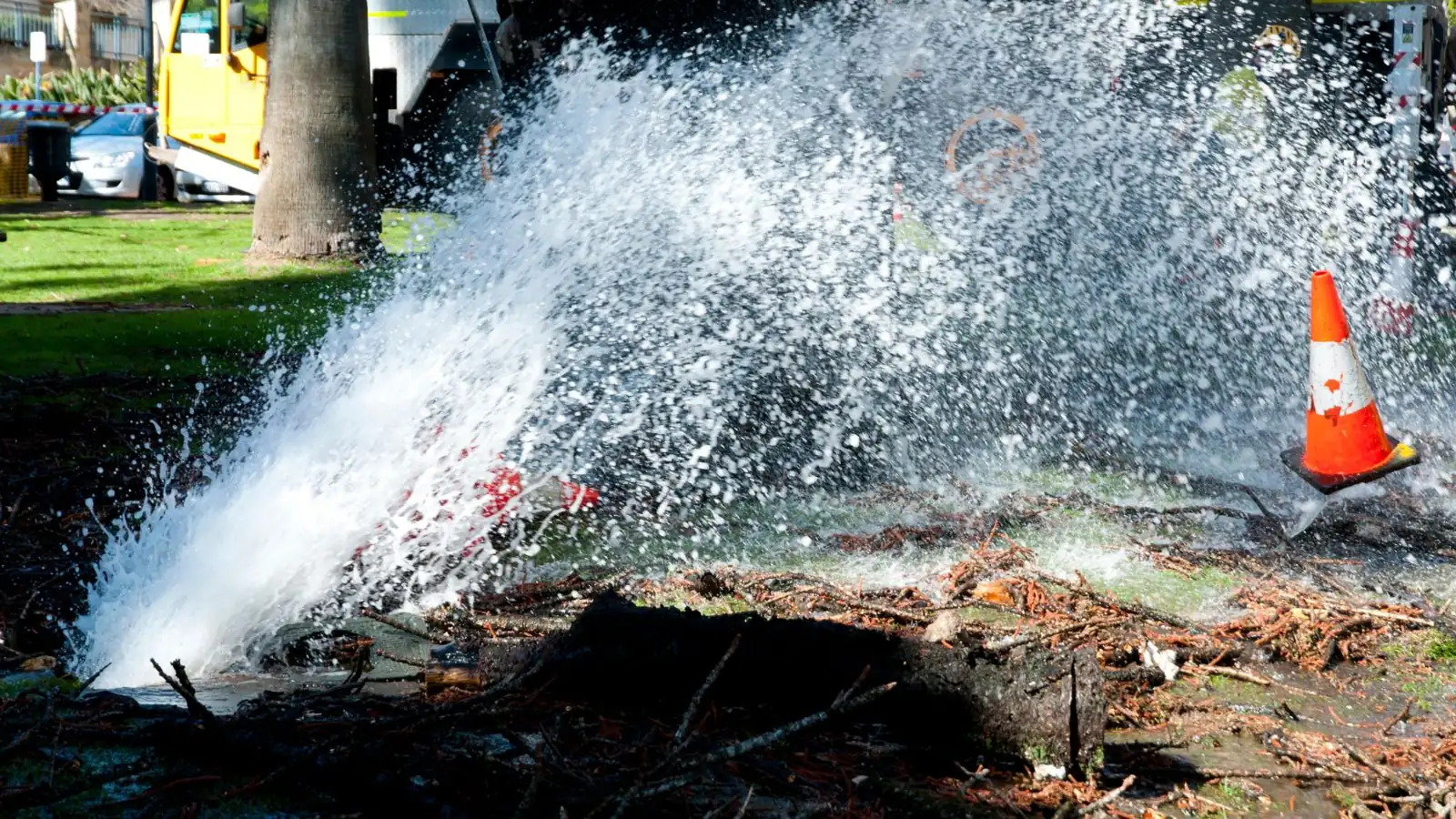
A burst pipe is a failure in a pressurized supply line, usually copper, galvanized steel or plastic, that sends water into a wall, ceiling or floor under full house pressure. It is an emergency at any hour because the water keeps coming until the valve is closed.
Our line is open 24/7. While you wait, find the main water shutoff and close it, then open a faucet on the bottom floor to drain the line. If you cannot reach the valve safely, call the city water department or the number on your water bill for guidance.
Burst pipe: what to do in the first ten minutes
Pressure is the difference between a leak and a burst. Work through these steps in order:
- Close the main shutoff valve, which is usually where the supply line enters the house near the meter.
- Switch off power to wet areas only if the panel is dry and you can reach it without stepping in water. Otherwise leave the power alone and call the utility or 911.
- Open the faucet on the bottom floor to relieve pressure, then open the highest to let air in.
- Photograph the damage and the broken section before anything is moved, then call the dispatch line.
Where a burst pipe sends the water
Water from a burst supply line follows gravity and the path of least resistance. It runs down inside the wall cavity, collects on the top plate of the floor below, and shows up as a bulge in a ceiling that looks fine from above. By the time a stain appears, the insulation in that cavity is already saturated.
That is why a burst pipe job is rarely just a wet floor. The assessment follows the water with moisture meters and thermal imaging, then opens the wall or ceiling at the bottom edge of the wet area so the cavity can dry. Details on the drywall side are in wall and drywall water damage repair.
Why this is not a plumbing page
We restore the damage. Repairing the pipe itself is plumbing work, and inside the city of Bethlehem a plumbing contractor must hold a Master Plumber's License under the city's published contractor rules. A licensed plumber fixes the failed line, and our crews dry what it soaked. Coordinating the two is common, and you can ask both for a written scope.
Burst pipe water: what dries and what does not
| Material | Typical outcome after clean supply water | Why |
|---|---|---|
| Drywall and insulation in the wall | Often cut out at the wet line or dried in place | Insulation holds water and dries slowly, drywall softens and can sag |
| Hardwood and laminate floors | Depends on how long they stayed wet | Boards swell along the edges, and hardwood floor repair decisions follow the moisture readings |
| Carpet and pad | Carpet is often saved, pad often discarded | Pad holds water under the carpet and is hard to dry in place |
| Framing and subfloor | Dried with air movers and dehumidifiers | Wood framing dries well when it is not sealed under flooring |
Burst pipes in older Bethlehem homes
The Northside 2027 neighborhood plan, published by the City of Bethlehem, lists a median construction year of 1940 for the Northside and 1955 for the city as a whole. Houses of that age have had plumbing repaired, extended and patched across generations, and a failure at an old joint can open a wall that was never touched. A burst line in a row home also sends water into the party wall and the neighbor's side, so call early.
The first hour and the next days
The first hour is about stopping the water and getting it out, which is the work described under water extraction. The next days are about drying the structure, covered in structural drying.
Between those two, a plumber repairs the pipe. We do not repair pipes, and the written scope records what was dried so the rebuild can start from a dry structure.
Standards that guide the work
Drying after a burst pipe is typically guided by ANSI/IICRC S500, the industry standard for water damage restoration. It treats clean supply water as the least contaminated category, but it also notes that water can become more contaminated the longer it sits, which is one reason timing matters.
What affects the cost of burst pipe cleanup
The pipe is the cheap part of the loss. The cleanup follows the water, so these five items shape the scope.
- Run time before shutoff
- Minutes of flow versus hours of flow changes how many rooms are wet.
- Water category
- Fresh supply water is Category 1, and it can be reclassified if it sits.
- Wall and ceiling cavities
- Opening, drying and sometimes replacing insulation is a separate scope line.
- Flooring type
- Tile, wood and carpet each dry differently and cost differently to restore.
- Days of drying
- Equipment runs until the meters show normal readings, not for a fixed number of days.
Costs are explained before work starts, and the written scope is the document to compare against your policy. Want your real number? Call (833) 521-1033 and describe what you see.
Frequently asked questions
Do you handle burst pipe emergencies at night or on weekends in Bethlehem?
Yes. The dispatch line is answered 24/7. A burst pipe in the middle of the night is the normal call, and you will be walked through the shutoff steps while a crew is arranged.
Does homeowners insurance cover a burst pipe?
Sudden and accidental water damage from a burst supply line is often covered, subject to your deductible and exclusions. A slow, long-running leak is often not. Ask your insurer, and photograph the damage before cleanup.
Should I turn the heat up after a burst pipe?
Keep the building warm enough to prevent more pipes from freezing in cold months, and let the drying crew set up equipment. Do not use heaters to dry wet materials, because they can warp wood and spread smoke or fire risk.
How long does it take to dry a home after a burst pipe?
Drying is measured by moisture readings, not the calendar. Many clean water losses reach normal readings in several days, and a thick floor or a sealed cavity can take longer.
Who fixes the pipe?
A licensed plumber repairs the line. We extract, dry and document the damage, and we can work around the plumber on site.