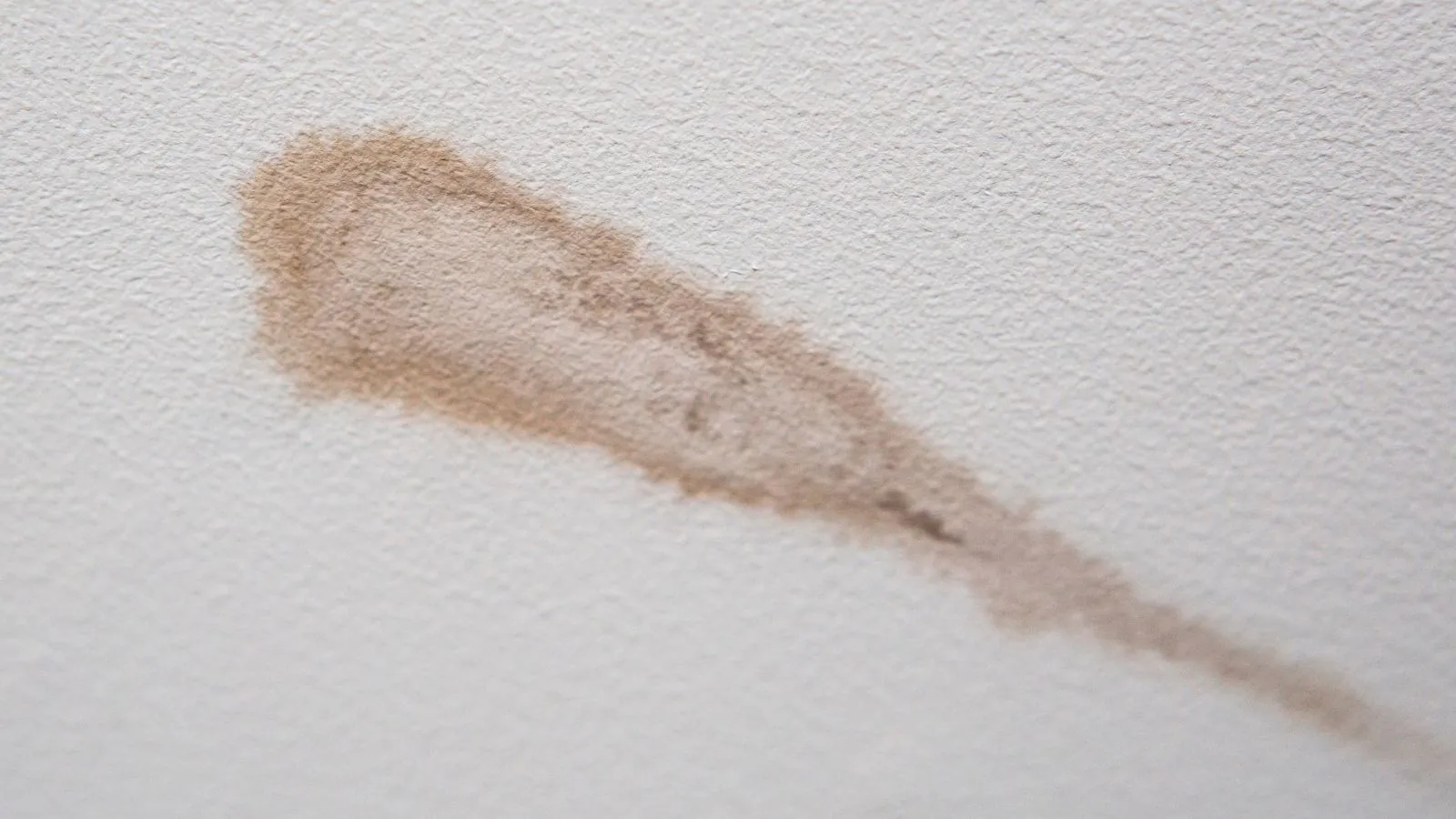
Ceiling water damage is the stain, sag or collapse of a finished ceiling after water collects above it. The source can be a roof leak, an upstairs bathroom, a supply line, or an air handler in the attic, and the same ceiling can look identical in all four cases.
A sagging or dripping ceiling is an emergency. Our line is open 24/7. Keep people out from under it, and if the ceiling is bulging, puncture nothing yourself unless you can place a bucket and stand clear.
A ceiling that is sagging or dripping
A wet ceiling can fail suddenly and bring plaster, insulation and water down with it.
- Move people, pets and furniture out from under the area.
- If a light fixture or fan is wet, leave it off and call the utility or 911 for any electrical concern.
- Place a bucket under a drip and, if the ceiling is bulging, ask us before you cut it.
- Photograph the stain and the room above it, then call the dispatch line.
Reading the stain
A brown ring with a darker edge usually means water has come and gone repeatedly. A fresh yellow patch that spreads means water is arriving now. A ceiling that looks sound but feels soft, or a paint bubble the size of a fist, means water is trapped between the paint and the drywall.
A stain tells you where the water came out, not where it entered. Roof water can travel along a rafter and drop 6 feet from the leak. That is why the first visit uses a moisture meter and thermal camera before anyone cuts drywall.
Roof leaks that end up in the ceiling
We do not repair roofs. A roofer fixes the roof, and we restore what the leak soaked: the attic insulation, the ceiling drywall and the room below. Roof leaks are covered here because a roof leak is a ceiling water damage problem for the household that lives under it.
Wind-driven rain, ice at the eaves and lifted shingles are common entry points. If a storm opened the roof, storm water damage cleanup explains how envelope damage is handled across the building.
What the ceiling repair process looks like
- Moisture mapping defines the wet area, including the attic or the floor above.
- Saturated insulation and sagging drywall are removed, and the cut is made past the wet edge.
- Air movers and dehumidifiers dry the cavity and the framing.
- The written scope lists what was removed and what remains for the rebuild.
Ceiling stains by source
| Source | Clues | Related page |
|---|---|---|
| Roof or attic | Stain appears after rain or snowmelt | This page and storm water damage cleanup |
| Upstairs bathroom or kitchen | Stain under a bath, toilet or sink | The source may be a supply or drain line, see appliance leak water damage |
| Supply line in the wall or attic | Steady drip regardless of weather | Burst pipe water damage |
| HVAC condensate | Stain near a vent or air handler | AC leak water damage |
Standards that guide the work
ANSI/IICRC S500 is the industry standard that guides professional water damage restoration. For ceilings, it is the reference behind decisions about when wet insulation and drywall should be removed and when materials can be dried in place.
What affects the cost of ceiling water damage repair
The visible stain is usually a fraction of the wet area. These items set the scope.
- Size of the wet area
- The cut must extend past the wet edge, so the area is larger than the stain.
- Insulation
- Saturated insulation is removed and counted as its own line.
- Ceiling type
- Drywall, plaster and textured ceilings differ in how they are opened and repaired.
- Source and duration
- A one-time leak is smaller than a repeated one.
- Finish and paint
- Repainting and texture matching are usually part of the rebuild, not the drying.
Costs are explained before work starts, and the written scope is the document to compare against your policy. Want your real number? Call (833) 521-1033 and describe what you see.
Frequently asked questions
Do you handle ceiling water emergencies at night or on weekends in Bethlehem?
Yes. The dispatch line is answered 24/7. A ceiling that starts dripping at night is a common call, and you will be told how to protect the room until a crew arrives.
Can a stained ceiling just be painted over?
Painting over a stain does not dry what is behind it. If the drywall is wet or insulation is soaked, mold and a weak ceiling are the likely result.
Do you repair the roof?
No. A roofer repairs the roof. We restore the ceiling, the insulation and the dried structure below it.
Will insurance cover a ceiling damaged by a roof leak?
Sudden storm damage is often covered, while wear or long-running leaks often are not. Ask your insurer and photograph the damage before repairs.
How do I know if the ceiling is about to fall?
Sagging, bulging, dripping or a cracked seam means it can fail. Stay out from under it and call.