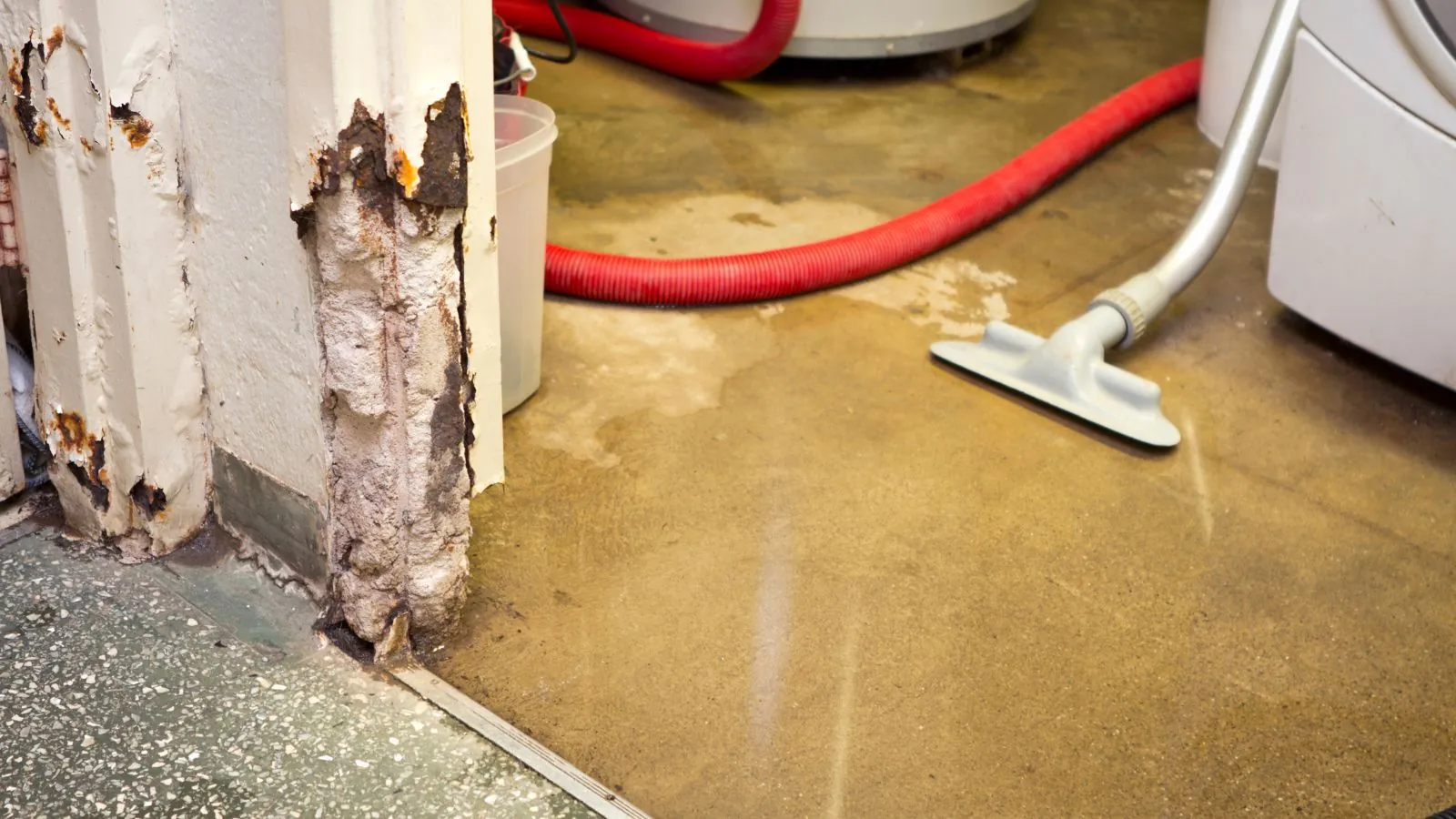
Water extraction is the removal of standing and pooled water with pumps, wet vacuums and extraction wands. It comes first because every hour that water sits on a floor, it wicks into drywall, baseboards and subfloors.
If water is on your floor right now, this is an emergency, and the dispatch line is open 24/7. While you wait for a crew, stop the source if you can reach the shutoff, keep children and pets out of the water, and lift anything valuable off the floor.
When standing water is an emergency
Water on a floor is urgent whenever it is deeper than a spill, keeps coming, or touches anything electrical. Use this short list while you wait:
- Shut off the main water valve if a pipe or fixture is the source and the valve is dry and reachable.
- Stay out of any room where water reaches outlets, appliances or a breaker panel. Call 911 or the utility for any electrical or gas concern before you call us.
- Move rugs, boxes, electronics and furniture legs out of the water. Wood furniture left in water stains the floor beneath it.
- Take photos and a short video of the water line on the walls before anything is moved or pumped.
Do not run a household vacuum on water, and do not enter water that may be contaminated.
Call (833) 521-1033How extraction is done
Crews match the tool to the water. Submersible pumps clear deep water in a basement or garage. Wet vacuums and extraction wands pull water out of carpet, pad and tile grout. Where carpet is stretched over wet padding, extraction wands run in slow, overlapping passes to draw water from the pad underneath.
Once the standing water is gone, the job is not finished. Wood, drywall and concrete still hold moisture that no vacuum can reach. Moisture meters and thermal imaging show where it went, and that map decides where air movers and dehumidifiers go next. The industry reference for this sequence is ANSI/IICRC S500, and you can ask any company whether its crews follow it.
What depth of water means for your next step
| What you see | What it usually means | What to do |
|---|---|---|
| A damp patch or a puddle under an appliance | A slow supply or drain leak that has soaked flooring | Stop the source and call for a moisture reading before the pad stays wet |
| Water covering part of a room, still rising | An active pressurized supply failure or a failed pump | Shut off the main valve if safe, then call the 24/7 line |
| Water over the floor of a basement or garage | Groundwater, a sump pump failure or a sewer backup | Stay out, keep power off to the area and call right away |
| Brown or foul-smelling water | Contaminated water that needs protective gear and disposal | Keep everyone out and read our sewage backup guidance |
Why Bethlehem basements fill the way they do
The city sits where Monocacy Creek and Saucon Creek meet the Lehigh River, and several neighborhoods slope toward those waterways. After the remnants of Ida in 2021, news reports described Saucon Creek flooding basements near Saucon Park and a sump pump that stopped during the surge. When a pump fails or the power goes out, the extraction job often starts in a finished basement.
If your basement flooded from the ground up, read about the basement water damage cleanup process, because contents and finished walls need separate decisions. For river or creek overflow, flood damage cleanup covers the contamination side.
Do not wait on a wet carpet
Carpet and its pad can often be saved when they are extracted soon after a clean water loss. If they stay wet for days, the pad usually has to be discarded and the floor beneath it dried. Carpet water damage restoration explains how that call is made.
What affects the cost of water extraction
No honest price can be given for a flooded room without seeing it. These factors decide the number, and each one is written into the scope before work starts.
- Water category
- Clean supply water is simpler than Category 2 or 3 water, which needs protective gear and disposal.
- Affected area
- Square footage and depth set how long pumps and extraction units run.
- Materials involved
- Carpet pad, hardwood and drywall are treated differently, and some items cannot be saved.
- Drying equipment and days
- Air movers and dehumidifiers are counted per day, so earlier extraction shortens the drying period.
- Rebuild scope
- Whatever has to be removed and replaced afterward is a separate line from the extraction itself.
Costs are explained before work starts, and the written scope is the document to compare against your policy. Want your real number? Call (833) 521-1033 and describe what you see.
Frequently asked questions
Do you handle water extraction emergencies at night or on weekends in Bethlehem?
Yes. The dispatch line is answered 24/7, including nights, weekends and holidays. Call and describe the water, and you will be told what to do while a crew is arranged. No arrival time is promised over the phone.
Can I use a shop vacuum myself?
A wet and dry shop vacuum can help with a small clean spill, but it will not draw water out of padding, wall cavities or a subfloor. Never use a household vacuum, and never use any vacuum near standing water that touches outlets.
What happens after the water is pumped out?
The structure still holds moisture. Meters check walls and floors, and drying equipment runs until readings return to normal. Skipping that step is how mold and warped floors begin.
Will insurance cover extraction?
Sudden and accidental water, such as a burst supply line, is often covered, while gradual leaks and flood water usually are not. Check your policy or ask your insurer, and photograph everything before cleanup.
How do I tell clean water from contaminated water?
Water from a broken supply line starts clean, but it can pick up contamination from floors and building materials within a day or two. Anything from a sewer, a toilet backup or a rising creek should be treated as contaminated from the start.