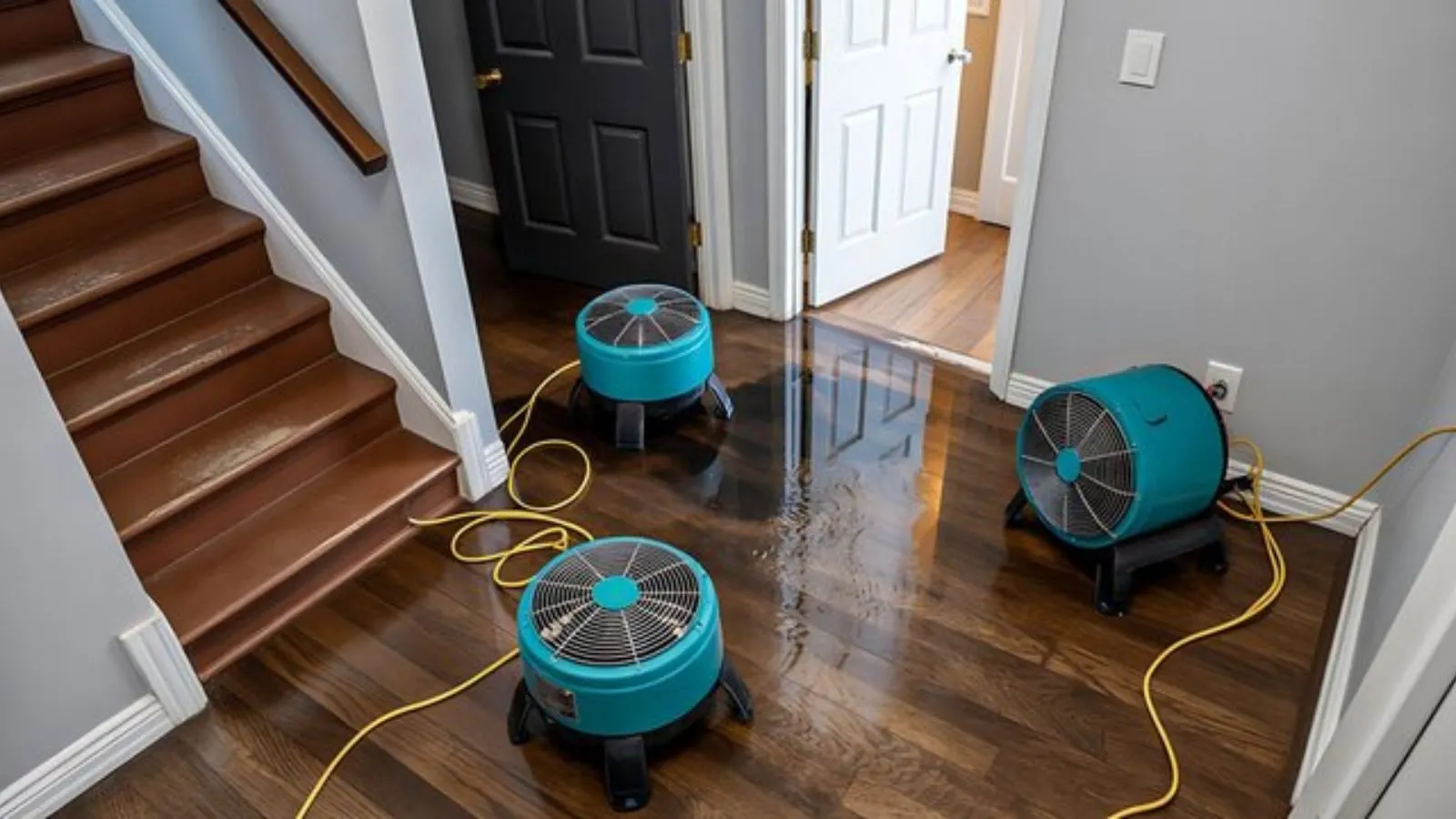
A scope of work is the document that says what will be done to your property, in what order and in what quantities. It is the reference you compare to your insurance policy and to the final invoice.
Scopes can look dense, but they follow a pattern. Once you see it, most scopes are easy to check.
The usual sections
- Loss description, including the source, date and category of water.
- Affected areas, listed room by room with square footage.
- Extraction and removal tasks, such as carpet pad removal or drywall cutouts.
- Drying plan, including equipment and monitoring.
- Cleaning and treatment of surfaces.
- Items not included, often rebuild and finish work.
Terms you may see
| Term | Meaning |
|---|---|
| Air mover | A fan that moves air across wet surfaces |
| LGR dehumidifier | A dehumidifier that removes moisture from the air |
| Flood cut | Removal of drywall to a set height above the water line |
| Antimicrobial | A treatment applied to surfaces after cleaning |
| Pack-out | Moving contents out of the affected area |
| Monitoring | Readings taken on a schedule to track drying |
Check the quantities
Compare the square footage and the room list to what you saw. If a room that was wet is missing, ask. If a dry room is listed, ask why. Scopes are only as good as the measurements behind them.
Equipment counts should match the size of the wet area. A tiny room does not need a dozen air movers, and a large floor needs more than a few, as structural drying explains.
Separate removal from rebuild
The scope should say what is removed, such as wet insulation or soft drywall, and what is left for rebuild. If a scope says replace drywall, ask whether that is included or a separate contract. Mixing them hides cost.
Our wall and drywall water damage repair page describes how cutouts are decided, and carpet water damage restoration shows when a pad is replaced.
Before you approve
Ask for moisture readings, photos and any assumptions in writing. Share the scope with your insurer and ask what they need. Keep a copy of the final version.
If conditions change, a good company sends a revised scope before doing extra work.
Mistakes to watch for in a scope
A common mistake is a scope that lists materials without quantities. Replace drywall means little without the square footage and the height of the cut. Ask for measurements so you can check them.
Another is a scope that lumps mitigation and rebuild into a single price. When they are separate, you can compare drying prices and rebuild prices on their own and use different contractors if you wish.
A third is a scope that ignores the cause. If a pipe broke or a roof leaked, the scope should say who is fixing it. Drying a structure while the source continues to leak wastes money.
Finally, watch for allowances and unit prices that are not explained. A good scope says what is included, what is excluded and what would change the price.
A short checklist before you sign
- Does it list every affected room with measurements?
- Does it say which materials are removed and which are dried?
- Does it show equipment types, counts and expected days?
- Does it say what readings you will receive?
- Does it list what is excluded?
- Does it say who handles permits and rebuild?
What to do when your insurer's scope differs
Your insurer's adjuster may write a scope that differs from the restoration company's. That is common, and it does not mean either one is wrong. Ask both parties to explain the differences line by line.
Share the moisture readings and photos with both. Records of what was wet are the best way to settle a difference about what needs to be dried or removed.
Keeping the scope up to date
A scope can change as the job goes on. A wall may open and show more damage, or readings may come down faster than planned. Ask the company to send a revised scope when that happens, and keep every version.
At the end, compare the final invoice with the last scope. Differences should have a written reason.
Sources and standards
Many scopes refer to ANSI/IICRC S500, the industry standard for water damage restoration. If a scope cites it, you can ask the contractor which parts they are applying, such as the water category and the drying goals.
Water still spreading? The dispatch line is answered around the clock.
Call (833) 521-1033Bethlehem note: permits and who to ask
The City of Bethlehem's Code Enforcement page describes a building and zoning permit application with plans, and says electric and plumbing applications are reviewed by a third-party state-certified plan reviewer. The page does not list which repairs need a permit.
For that answer, the page lists the Code Enforcement Office at 610-865-7091 and the City at 610-865-7000. Ask before rebuild work begins, and make sure the scope says who is responsible for permits.
Frequently asked questions
What is a scope of work?
A written description of the work to be done, with quantities, equipment and exclusions.
What does flood cut mean?
Removing drywall to a height above the water line so the cavity can dry.
Who writes the scope?
The restoration company writes it. Your insurer may write its own, and the two can differ.
Can I question a line item?
Yes. Ask for the reason and the measurement behind it.
Is rebuild part of the scope?
Sometimes. Check whether it is listed as included or excluded.