Not every wet spot needs a restoration crew. A small spill on a hard floor can be mopped and dried with a fan. Water that has reached walls, subfloors or insulation, or that is contaminated, is another matter.
This guide helps you decide, and it is honest about the limits of household tools.
Safe to handle yourself
- A small amount of clean water on a hard floor that you mop up within a few hours.
- A wet towel or rug that you can dry outdoors or in a dryer.
- A damp patch under a sink caught early, where you can see the cabinet is dry underneath.
Call a professional when
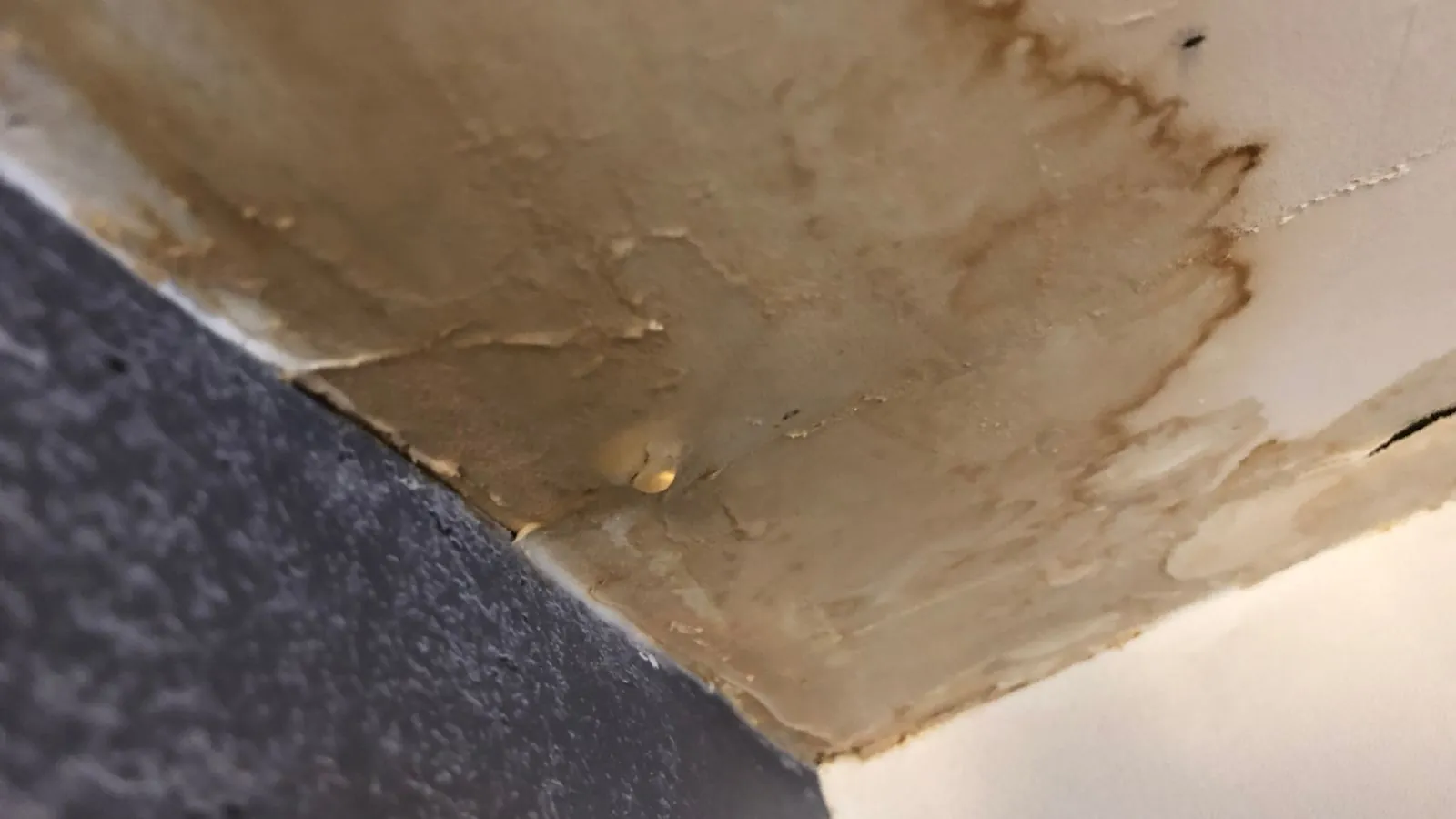
- Water has reached walls, ceilings, insulation or a subfloor.
- The area is larger than a few square feet or the water has been there more than a day.
- The water is brown, smells foul or came from a sewer, toilet or flood. Treat it as contaminated.
- Water has touched outlets, appliances or a panel.
- You smell mustiness or see mold-like staining.
Why a fan and a vacuum are not enough
A household fan moves air but does not remove moisture from the air. A consumer dehumidifier handles a small room, but not a wet wall cavity. A shop vacuum can pull water from a floor, though it does not reach the pad under carpet or the framing inside a wall.
Professionals use extraction wands, air movers and LGR dehumidifiers, plus meters that show whether the structure is actually dry. Our structural drying page explains that process.
Dry things in the right order
- Stop the source of the water.
- Remove standing water with a mop, towels or a wet vacuum if it is clean and electrical hazards are not present.
- Remove wet rugs and small items to dry separately.
- Open windows and run fans if the weather allows, and run a dehumidifier in closed rooms.
- Check again after a day. If the area still feels damp or smells musty, call for a reading.
What never to do
Never use a household vacuum on standing water. Never go into water that touches outlets, a panel or appliances. Never clean sewage with household towels, and read sewage backup cleanup if that is the source.
Never cover wet flooring with plastic, and never paint over a stain before the wall is dry. Those steps trap moisture.
A ten-minute moisture check
These checks are not a substitute for a moisture meter, but they tell you whether a reading is worth requesting. Dry to the touch does not always mean dry inside the wall.
- Press the back of your hand to the wall at the baseboard. A cool or clammy feel suggests moisture.
- Look for color changes, bubbling paint or a tide line on the wall.
- Smell the air in a closed room. A musty smell means something is damp that you cannot see.
- Check the floor for cupping, soft spots or a squishy feel underfoot.
- Compare a suspect wall with a dry wall in another room. Differences are clues.
- If you find anything, take photos and call for a moisture reading.
What a professional adds
The main thing a professional adds is measurement. A moisture meter and a thermal camera show where the water went, including places you cannot see. Readings repeated over several days show whether drying is working.
A crew also brings the right equipment for the job size, a way to remove materials safely and records you can share with your insurer. If you are unsure, a phone call costs nothing, and an honest company will say if your situation is a do-it-yourself one. For a wet cellar, basement water damage cleanup shows what the drying involves.
When time is the deciding factor
Water that has been present for more than a day or two is a stronger reason to call, even when the area is small. The longer materials stay wet, the more likely they are to swell, stain or grow mold. A reading can tell you whether the spot is drying or still wet.
Sources and standards
The CDC publishes homeowner guidance on flood cleanup, and ANSI/IICRC S500 is the industry standard professionals use. The line in this guide between do-it-yourself work and professional work follows the same logic of contamination and moisture.
Water still spreading? The dispatch line is answered around the clock.
Call (833) 521-1033Bethlehem note: what the CDC says about drying out
The Centers for Disease Control and Prevention advises that if flood or storm water has entered your home, you dry it out as soon as possible. It also says electrical equipment and appliances must be completely dry before they are returned to service, and that a certified electrician should check them if there is any question.
Bethlehem sits where Monocacy Creek and Saucon Creek meet the Lehigh River, so water from outside is a real possibility. If the water in your home came from outside, treat it as contaminated and call a professional.
Frequently asked questions
Can I dry a wet carpet myself?
Only if the area is small, the water was clean and you can lift the carpet to dry the pad. Otherwise, call for extraction.
How long should I wait before calling?
Do not wait. If water is on a floor, call within hours, since mold and swelling start quickly.
Is a dehumidifier from the hardware store enough?
For a small spill, it can help. For a wet wall or a flooded basement, it is not.
Can I use a wet vacuum on a flooded basement?
Not if the water reaches outlets or appliances. Stay out and call.
How do I know the area is dry?
A moisture meter shows it. Feel and smell are not reliable.